
CONTACTS AND LOCATION
The postal address of Ecton Mine Educational Trust is:
GA Cox Study Centre, The Hillocks, Ecton
Ashbourne, Derbyshire, DE6 2AH
and there is a telephone: 01298 84522 (but please note, this is answered only when the Centre is in use, though there is a message service which will alert the mine manager by email)
For information and assistance with EHFSA educational activities please contact Susan Wilkinson on SWilkin799@aol.com or 01732 456997 – or otherwise Bob Thompson on lesrob42@gmail.com 01889 882363
Location – how to find us
If driving from Hulme End (the Manifold Inn), take the road to the south. The first right is signposted to Ecton. Continue along this road until you reach a large layby on the left. Do NOT take the turning to “Back of Ecton” (which is on the wrong side of Ecton Hill!), or the private paved access road up the hill at the Ecton crossroads. If using satnav, also do NOT rely on the postcode because it will take you to the wrong place! For detailed routing from other directions, download here. (opens in a new tab)
Parking is on a large layby 150 yards/metres south of the track that goes up to the study centre, grid reference SK 096582 (OS 1:50,000 Sheet 119).
What3Words location is ///tram.places.introduce
The Centre is on the hillside, beside a private building with a prominent copper spire.
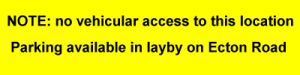
IMPORTANT NOTE: Under no circumstances should you attempt to drive up the private track from the Ecton crossroads. Not only is there no general right of vehicular access, but, more practically, you will be unable to turn around at the top. You cannot park there, and reversing down the steep track is definitely not recommended. There is usually plenty of parking space in the wide layby on Ecton Road or in the narrow strip of land next to the concrete platform opposite the layby.
EMAIL ENQUIRIES:
Downloadable Google map (Hulme End: The Manifold Inn at top right (NE corner), Ecton Mine at bottom left (SW corner)


 The powder house, where dangerous explosives were stored. This small shed was placed well away from other buildings and was erected in 1884. The interior was originally lined with wooden panels as an added precaution against accidentally creating sparks.

 was lowered on one side and it was converted to a field barn. The steam engine was located in the far half of the building, while its boiler was in the near half. A short distance upslope there was a small reservoir pond for the boilers fed by water brought up from the mine.


 In the 1760s-80s the internationally important Deep Ecton Copper Mine made a fortune for the Dukes of Devonshire. The first copper was mined here long before, in the Bronze Age over 3,500 years ago. The Dukes, who owned northern and western parts of the hill, had their mines worked in-house for over 50 years from 1760. From the 1820s private mining companies embarked on a fruitless search for further rich ore deposits. The mines were finally abandoned in 1889. While the 19th century ventures lost investors’ money, with them at best only finding other peoples’ leavings, they kept local miners in work for decades.
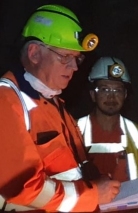

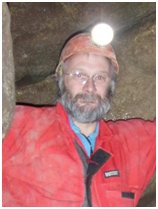 I am an exploration and mining geologist (C. Geol) with over 25 years of experience in the deep geological disposal of radioactive waste and 7 years of experience of exploration, environmental impact assessment and mining feasibility for the Kayelekera uranium deposit in Northern Malawi, Africa. I retired from the British Geological Survey in 2016 and am currently a member of the Government’s Committee on Radioactive Waste Disposal. I undertook a PhD on caves and mines in the Peak District and, as an active caver and mine explorer, have been studying the underground world of the Peak District since the mid 1970’s, including the mines of the Ecton Area. I am a director (editor) of the Peak District Mines Historical Society and the mine manager of their Temple Mine in Matlock Bath.
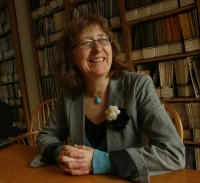 mongst geologists and others involved in the application of geoscience, particularly through the promotion of professional titles such as CEng, CGeol, and EurGeol. She has served on the Council of the Geological Society of London and is a past President of the European Federation of Geologists. For many years, she has been a member of the Pan European Reserves and Resources Reporting Committee (PERC).
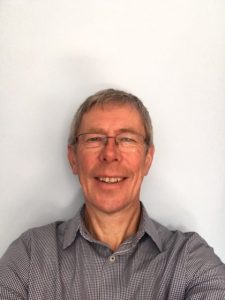 Phil in Organic Chemistry, Nottingham Uni 1977-79, awarded 1981
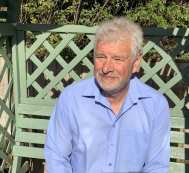 I am a geoscientist with more than 45 years of experience. After working as a mine geologist in the Yorkshire Coalfield for 12 years, I moved on to seismic exploration for coal, potash and other minerals focussing on seismic interpretation and delineating geological structure to aid mine planning. My prospect experience includes projects in UK, Spain, Turkey, Australia, Africa, Argentina and Canada.
 ng and engineering around the world. Although I am now retired I continue to hold Board appointments with national and international regulatory and standards organisations which I find professionally stimulating and thoroughly rewarding.