THIS IS ECTON
In the 1760s-80s the internationally important Deep Ecton Copper Mine made a fortune for the Dukes of Devonshire. The first copper was mined here long before, in the Bronze Age over 3,500 years ago. The Dukes, who owned northern and western parts of the hill, had their mines worked in-house for over 50 years from 1760. From the 1820s private mining companies embarked on a fruitless search for further rich ore deposits. The mines were finally abandoned in 1889.
Significance, Access and Credits
... and click on map features for more information

Upper dressing floor

As it is now (left) and artist's impression as it was in the 1880s (right)
This large back wall for a building on top of the massive main waste heap was erected in the 1880s and used to separate the ores from waste rock so that they was ready for smelting. The two hoppers behind were used to store ore ready for processing
Engine House

To access the engine house as you get to the ridgetop, keep the building on your left and then go through the stile near the top corner of the field at Y, go on to a further stile on the left, take this and then go through the gate to reach the building.
The building on the ridgetop started life as the ‘house’ for a steam engine designed by James Watt and used to bring ores from depth up to river level; it was built in 1788 and is the oldest surviving mine winding house in the world. The engine was used until at least the 1830s and probably to about 1850.
Watch a video of a 3D model of the engine house and restored balance cone
The Study Centre

The outdoor classrooms of the Geoff Cox Study Centre are used by schools from across Britain. In the 1970s Geoff, a mining engineer, founded this to inspire students to take an interest in minerals and modern mining. Visit https://ectonhillfsa.org.uk and https://ectonmine.org.uk.
In recent years Deep Ecton Mine has been used for scientific research. This has included exploring the vast workings now flooded below the level of the Manifold River using experimental submersible robots developed by a multi-national team. Visit https://unexmin.eu and https://unexup.eu

Waste heap

At the top of the large waste heap surrounded by trees, behind a steel door, there is a flooded passage that originally ran under much of Ecton Hill, which was created in the 1850s to search without success for more rich ore deposits.
Ridge Top
The ridgetop had shallow copper workings dug over 3,500 years ago and was mined again in the 17th Century when Ecton was one of the first mines in Britain to use gunpowder to break rock.
After crossing the stile at A follow the narrow public footpath going diagonally upslope for about 200m, then turn sharply left taking a second narrow path towards the top of the waste heap at C


 The powder house, where dangerous explosives were stored. This small shed was placed well away from other buildings and was erected in 1884. The interior was originally lined with wooden panels as an added precaution against accidentally creating sparks.

 was lowered on one side and it was converted to a field barn. The steam engine was located in the far half of the building, while its boiler was in the near half. A short distance upslope there was a small reservoir pond for the boilers fed by water brought up from the mine.


 In the 1760s-80s the internationally important Deep Ecton Copper Mine made a fortune for the Dukes of Devonshire. The first copper was mined here long before, in the Bronze Age over 3,500 years ago. The Dukes, who owned northern and western parts of the hill, had their mines worked in-house for over 50 years from 1760. From the 1820s private mining companies embarked on a fruitless search for further rich ore deposits. The mines were finally abandoned in 1889. While the 19th century ventures lost investors’ money, with them at best only finding other peoples’ leavings, they kept local miners in work for decades.
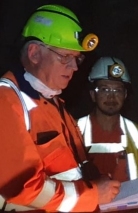


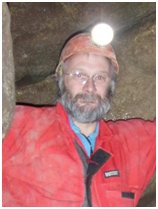 I am an exploration and mining geologist (C. Geol) with over 25 years of experience in the deep geological disposal of radioactive waste and 7 years of experience of exploration, environmental impact assessment and mining feasibility for the Kayelekera uranium deposit in Northern Malawi, Africa. I retired from the British Geological Survey in 2016 and am currently a member of the Government’s Committee on Radioactive Waste Disposal. I undertook a PhD on caves and mines in the Peak District and, as an active caver and mine explorer, have been studying the underground world of the Peak District since the mid 1970’s, including the mines of the Ecton Area. I am a director (editor) of the Peak District Mines Historical Society and the mine manager of their Temple Mine in Matlock Bath.
 mongst geologists and others involved in the application of geoscience, particularly through the promotion of professional titles such as CEng, CGeol, and EurGeol. She has served on the Council of the Geological Society of London and is a past President of the European Federation of Geologists. For many years, she has been a member of the Pan European Reserves and Resources Reporting Committee (PERC).
 Phil in Organic Chemistry, Nottingham Uni 1977-79, awarded 1981
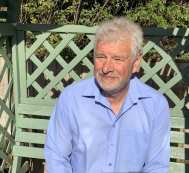 I am a geoscientist with more than 45 years of experience. After working as a mine geologist in the Yorkshire Coalfield for 12 years, I moved on to seismic exploration for coal, potash and other minerals focussing on seismic interpretation and delineating geological structure to aid mine planning. My prospect experience includes projects in UK, Spain, Turkey, Australia, Africa, Argentina and Canada.
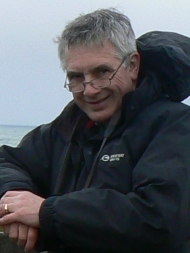 ng and engineering around the world. Although I am now retired I continue to hold Board appointments with national and international regulatory and standards organisations which I find professionally stimulating and thoroughly rewarding.